Integrated Pest Management, commonly known as IPM, is a science-based approach to pest control that combines prevention, monitoring, and targeted treatment to manage pests with the least possible risk to people, pets, and the environment. Unlike traditional pest control that relies primarily on routine pesticide application, IPM focuses on understanding why pests are entering your home and addressing those root causes first, reserving chemical treatments for situations where they’re genuinely needed and using the most targeted products available. The EPA has endorsed IPM as the standard for environmentally sensitive pest management since the early 1990s, and the global IPM market is projected to reach $217 billion by 2030, reflecting how widely this approach has been adopted. We want to help homeowners across Reno, Sparks, Truckee, Carson City, and Northern Nevada understand what IPM actually involves, why it works better than conventional spraying, and how it applies to the specific pest challenges we face in our high desert climate.
Summary
- IPM is a four-step process — inspection, identification, prevention, and targeted treatment — that solves pest problems at their source rather than just killing the pests you can see.
- Research published in the Journal of Economic Entomology found that IPM reduced cockroach populations to zero within four weeks, while conventional spraying only reduced populations by about 70% over eleven weeks.
- IPM reduces indoor pesticide residue levels by an average of 74% compared to conventional pest control methods, making it significantly safer for homes with children and pets.
- The approach is especially effective in Northern Nevada, where many common pest problems are driven by environmental conditions — like our arid climate and cold winters — that can be addressed through prevention and exclusion.
The Four Steps of Integrated Pest Management
IPM isn’t a single product or technique. It’s a decision-making framework that follows a logical sequence designed to solve the problem as effectively as possible while minimizing unnecessary chemical exposure. Every IPM program, whether it’s for a home, a school, or a commercial building, follows the same four fundamental steps.
How the Process Works
Step 1: Inspection and monitoring
Every IPM program begins with a thorough inspection to determine what’s happening and how severe the problem is. The technician looks for pest activity, entry points, harborage areas, moisture sources, and food attractants. Sticky traps and monitoring devices may be placed to track activity levels over time. This step is critical because it establishes a baseline — you can’t measure whether a treatment is working if you don’t know where you started.
Step 2: Identification
Accurate pest identification determines every decision that follows. Different species behave differently, nest in different locations, and respond to different treatments. Odorous house ants require a different baiting strategy than carpenter ants. Deer mice carry different health risks than house mice. Misidentification is one of the most common reasons pest control treatments fail.
Step 3: Prevention
This is where IPM diverges most sharply from traditional pest control. Before reaching for any product, an IPM approach asks: what conditions are allowing this pest to thrive here? The answers usually involve some combination of entry points that need sealing, moisture problems that need fixing, food sources that need eliminating, and harborage areas that need clearing. Prevention is the most cost-effective component of IPM because the changes are long-lasting and don’t require repeated application.
Step 4: Targeted treatment
When treatment is necessary, IPM uses the most targeted, least toxic effective method available. This might mean gel baits placed in specific crevices rather than broad-spectrum spraying across an entire room. It might mean tamper-resistant bait stations placed by a professional rather than loose rodenticide scattered in a garage. The goal is maximum impact on the pest with minimum exposure to everything else in the environment.
Key Takeaways
- IPM follows four steps — inspection, identification, prevention, and targeted treatment — applied in that specific order.
- Prevention comes before chemical intervention, which is the fundamental difference between IPM and conventional spray-based pest control.
- Each step builds on the one before it, creating a comprehensive approach that addresses root causes rather than just symptoms.
Why IPM Works Better Than Conventional Pest Control
The research on this is clear and consistent. IPM outperforms conventional spray-based pest control in both effectiveness and safety across virtually every study that has compared the two approaches.
The Evidence
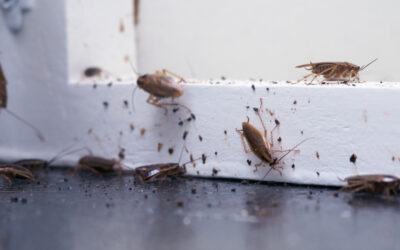
A study published in the Journal of Integrated Pest Management found that IPM programs in residential buildings were proven more effective than conventional cockroach and bed bug control methods. In one peer-reviewed study, IPM using targeted gel baits reduced cockroach populations from an average of 12.2 per unit to zero within four weeks. The conventional spray-only approach, by comparison, reduced populations from 11.5 to 3.4 per unit over eleven weeks — a slower response that still left active cockroaches behind.
Research conducted in New York City public housing found that a single IPM visit was more effective at reducing cockroach populations and allergen levels than the regular application of pesticides alone, while simultaneously reducing the amount of pesticide used. A separate 12-month IPM program in a low-income apartment building reduced bed bug infestation rates from 15% to 2.2%.
On the safety side, a study measuring indoor insecticide residues found that implementing an IPM program reduced the average concentration of pesticide residues on apartment floors by 74% over 12 months. The number of individual insecticides detected per apartment dropped from 2.5 to 1.5. These findings matter because lower pesticide residues in the home mean reduced exposure for children who play on floors and pets who groom themselves after contact with treated surfaces.
Key Takeaways
- Peer-reviewed research consistently shows IPM achieves faster, more complete pest elimination than conventional spray methods.
- IPM reduces indoor pesticide residues by roughly 74%, directly benefiting families with children and pets.
- Even a single professionally conducted IPM visit has been shown to outperform ongoing conventional pesticide applications.
How IPM Applies to Northern Nevada Pest Problems
IPM isn’t just a concept that works in research settings — it’s particularly well suited to the pest challenges homeowners face in Reno, Sparks, Truckee, Carson City, and throughout Northern Nevada. That’s because many of our most common pest problems are driven by environmental conditions that IPM is specifically designed to address.
Local Applications
Ants in the Reno area are primarily driven indoors by our arid climate and their search for water. An IPM approach starts by identifying and fixing moisture sources — leaky pipes, dripping faucets, condensation around windows — and sealing the entry points ants are using to get inside. Targeted baits are then placed strategically so foragers carry the product back to the colony. This combination eliminates the colony at its source while removing the conditions that attracted ants in the first place. Compare that to spraying the ant trail with a contact killer, which wipes out a few dozen foragers but leaves the colony, the pheromone trail, and the moisture source completely intact.
Rodents in Northern Nevada push indoors aggressively from October through March as temperatures drop. IPM for rodents means inspecting the entire exterior of the home for gaps as small as a quarter inch, sealing those gaps with steel mesh or other professional-grade materials, setting traps based on actual rodent behavior patterns, and removing outdoor harborage like woodpiles and dense vegetation near the foundation. Exclusion — physically preventing rodents from entering — is far more effective and long-lasting than simply setting traps inside a home where new rodents can follow the same entry points.
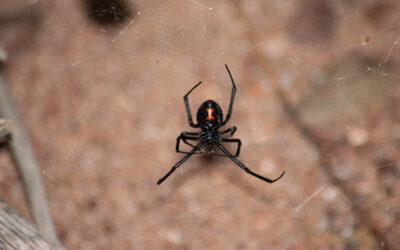
Spiders around Reno homes, including black widows in garages and crawl spaces, are a symptom of a larger insect population. An IPM approach addresses the underlying insect problem that’s sustaining the spider population rather than just spraying the spiders you can see. Reduce the food supply, and spider populations drop naturally.
Key Takeaways
- Northern Nevada’s most common pest problems — water-seeking ants, cold-weather rodent invasion, and insect-driven spider populations — are ideal candidates for IPM because they’re rooted in addressable environmental conditions.
- Exclusion and prevention work especially well in our region because many pest pressures are seasonal and predictable.
- Targeting root causes like moisture, entry points, and harborage delivers longer-lasting results than surface-level chemical treatment alone.
What to Ask Your Pest Control Provider About IPM
Not every pest control company practices genuine IPM. Some use the term as a marketing label while still relying primarily on routine chemical applications. Here’s how to tell the difference.
Signs of a Real IPM Approach
A provider practicing true Integrated Pest Management will do the following:
- Inspect before treating — they never recommend a treatment plan without first conducting a thorough inspection of your property, inside and out.
- Identify the species — they tell you exactly what pest you’re dealing with and explain why that identification matters for the treatment approach.
- Recommend prevention alongside treatment — they point out entry points that need sealing, moisture problems that need fixing, and sanitation steps you can take to reduce attractants.
- Use targeted products in specific locations — they apply treatments in cracks, crevices, and harborage areas rather than broadly spraying entire rooms or open surfaces.
- Monitor and follow up — they use traps or monitoring devices to track whether the treatment is working and adjust the plan if needed.
If a pest control company shows up, sprays the baseboards, and leaves without explaining what they found, what they used, or what you can do to prevent the problem from coming back — that’s not IPM. That’s conventional pest control with a modern label.
Ask specifically: “Do you practice Integrated Pest Management?” and then listen for whether the answer includes inspection, identification, prevention, and targeted treatment — all four components. If the answer is just “we use low-toxicity products,” that’s only one piece of the puzzle.
Key Takeaways
- True IPM includes all four components: inspection, identification, prevention, and targeted treatment — not just the use of low-toxicity products.
- A provider who inspects thoroughly, explains their findings, recommends prevention steps, and uses targeted application methods is practicing genuine IPM.
- Ask your provider directly whether they follow an IPM framework and listen for specifics, not just buzzwords.
Get Smarter Pest Control for Your Home
We believe Integrated Pest Management is the most effective and responsible way to protect your home from pests, and it’s the approach we bring to every job. IPM works because it treats the cause of the problem, not just the symptoms, and it does so with the least possible chemical exposure for your family and pets.
At Right Away Pest Solutions, we combine over 20 years of hands-on experience with an approach that prioritizes inspection, identification, prevention, and targeted treatment for every home we serve across Reno, Sparks, Truckee, Carson City, and the surrounding Northern Nevada communities. We offer free inspections with no obligation, no contracts, and a satisfaction guarantee that means if pests come back, we come back.
Call us at (775) 722-7708 to schedule your free inspection and experience the difference a smarter approach to pest control makes. Learn more about our full range of pest control services across Northern Nevada.