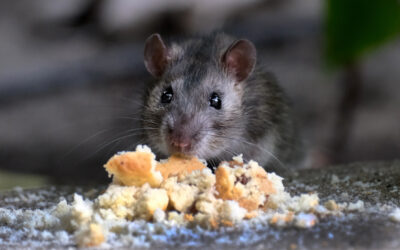
Ultrasonic rodent repellers do not work as a reliable method for controlling mice or rats in real-world home environments. Independent studies, university research programs, and the Federal Trade Commission have all consistently concluded that these devices fail to deliver the long-term rodent control they promise, with rodents typically habituating to the high-frequency sounds within days to weeks before resuming normal feeding, nesting, and breeding behavior.
The FTC has sent warning letters to more than 60 manufacturers of ultrasonic pest devices for making effectiveness claims that aren’t supported by scientific evidence, and the agency has stated directly that laboratory tests show these devices do not control insects or rodents in a home environment.
We understand why homeowners across Reno, Sparks, Truckee, Carson City, and Northern Nevada are drawn to these products. They’re affordable, chemical-free, and promise effortless pest control with the push of a button.
But we’ve spent over 20 years solving rodent problems professionally, and we owe you the honest answer before you spend money on something that won’t solve the problem.
Summary
- The FTC has taken enforcement action against more than 60 ultrasonic pest repeller manufacturers for making unsubstantiated effectiveness claims, and no brand or model has been scientifically validated for residential pest control.
- A review published in the Journal of Economic Entomology found that while ultrasonic devices caused brief avoidance behavior in laboratory settings, rodents habituated to the sounds within days to weeks and resumed normal activity near active devices.
- Ultrasonic sound waves cannot pass through walls, furniture, or solid objects, meaning coverage is limited to the single room where the device is placed, and even within that room, any object between the device and the rodent blocks the signal.
- Proven rodent control requires a combination of trapping, entry point exclusion, and sanitation. There are no shortcuts, and no plug-in device can substitute for physically removing rodents and sealing the gaps they use to enter.
What Ultrasonic Repellers Claim to Do
Ultrasonic rodent repellers are plug-in electronic devices that emit high-frequency sound waves, typically ranging from 20,000 to 65,000 hertz, which falls above the range of human hearing but within the hearing range of rodents. The premise is simple and appealing. The sound waves supposedly create an environment that’s intolerable to mice and rats, driving them out of your home without chemicals, traps, or professional service.
Why the Concept Sounds Convincing
The marketing is compelling because the underlying science contains a grain of truth. Rodents can hear ultrasonic frequencies, and laboratory experiments have shown that sudden exposure to certain high-frequency sounds can cause brief startle responses or temporary avoidance behavior. The problem isn’t that rodents can’t hear the devices. The problem is that they quickly learn the sounds are harmless and stop responding.
Manufacturers often cite laboratory results to support their claims, but those results rarely translate to real-world conditions. A lab setting is controlled, confined, and devoid of the competing stimuli that exist in an actual home. Once food, water, warmth, and nesting opportunities are present, the motivation to stay far outweighs the minor irritation of an unfamiliar sound.
Key Takeaways
- Ultrasonic repellers emit high-frequency sound waves (20,000 to 65,000 Hz) that rodents can hear but humans generally cannot.
- While rodents do initially react to the sounds, the effect is temporary, and laboratory results do not translate to real-world home environments.
- The appeal of these devices lies in their simplicity and chemical-free promise, but the science behind their long-term effectiveness is not there.
What the Research Actually Shows
The scientific consensus on ultrasonic rodent repellers is clear and consistent across multiple independent studies, university research programs, and government agencies.
Study After Study Shows the Same Result
A review published in the Journal of Economic Entomology examined multiple studies on ultrasonic rodent repellers and found that while some devices caused short-term avoidance behavior in controlled settings, rodents consistently habituated to the sound and returned to normal behavior within days to weeks. The review concluded that the devices did not provide reliable long-term control.
A study conducted for the U.S. Department of Agriculture and the National Wildlife Research Center found that rodents stopped responding to ultrasonic sounds after just a few days of exposure. The initial avoidance behavior disappeared once the animals realized the sound posed no actual threat.
University of Arizona research confirmed that rodents acclimate to harmless stimuli rapidly, returning to normal feeding, nesting, and movement patterns once they determine the stimulus is not dangerous. This process, known as habituation, is a fundamental and well-documented aspect of rodent neurobiology, not a flaw in any specific device.
A 2007 Cochrane systematic review examined 10 field studies of ultrasonic devices targeting mosquitoes and found no evidence of any repellent effect, recommending that further trials be discontinued due to the complete lack of promising results. While this review focused on insects rather than rodents, it underscores the broader pattern of ultrasonic technology failing to deliver measurable pest control results.
The Federal Trade Commission has been the most consistent voice on this issue. Starting in 2001, the FTC took formal enforcement action against manufacturers, warning them to substantiate their claims with scientific evidence. The agency has since issued warning letters to more than 60 companies and has stated publicly that laboratory tests show these devices do not control pests in a home environment.
Key Takeaways
- Multiple independent studies from universities, the USDA, and peer-reviewed journals consistently show that rodents habituate to ultrasonic sounds within days to weeks.
- The FTC has warned more than 60 manufacturers and stated that there is no scientific evidence these devices control rodents in homes.
- Habituation is not a device-specific flaw. It is a fundamental rodent behavior that applies to all ultrasonic repeller brands and models equally.
The Physical Limitations Most People Don’t Know About
Even setting aside the habituation problem, ultrasonic repellers have a fundamental physical limitation that makes them impractical for home use.
Sound Waves That Can’t Reach the Problem
Ultrasonic sound waves cannot pass through walls, furniture, appliances, or any solid object. They travel in a straight line from the device and bounce off hard surfaces, creating dead zones behind every obstacle in the room. A single bookshelf, couch, or kitchen island between the device and a rodent’s travel path is enough to block the signal entirely.
This means that even in the room where the device is plugged in, coverage is incomplete and riddled with gaps. And since most rodent activity happens inside wall voids, above ceiling panels, under insulation, and behind appliances, the areas where mice and rats actually live and travel are almost entirely shielded from the sound.
If a mouse is nesting inside your wall and the ultrasonic device is plugged into an outlet on the other side of that wall, the sound never reaches the mouse. The wall itself acts as a complete barrier. This is not a limitation that better technology can overcome. It’s a fundamental property of how ultrasonic sound behaves in physical space.
Consider the typical Northern Nevada home. Mice enter through foundation gaps, travel inside wall cavities, nest behind insulation in the attic, and forage behind kitchen appliances. An ultrasonic device sitting on a kitchen counter is physically incapable of projecting sound into any of those locations.
Key Takeaways
- Ultrasonic waves cannot penetrate walls, furniture, or solid objects, meaning the signal never reaches the wall voids, attics, and hidden spaces where rodents actually live.
- Coverage within a single room is incomplete because every piece of furniture and every appliance creates a dead zone behind it.
- The physical behavior of ultrasonic sound makes these devices structurally incapable of reaching rodent nesting and travel areas inside a home.
What Actually Works to Control Rodents
If ultrasonic repellers don’t work, the natural follow-up question is what does. The answer hasn’t changed in decades, because the fundamentals of rodent biology haven’t changed. Effective rodent control requires three components working together, and no single product or device can substitute for any of them.
The Three-Part Approach That Delivers Results
1. Trapping. Snap traps placed along walls, behind appliances, and in areas where droppings are concentrated are the most effective and humane method for removing mice and rats already inside your home. Place traps perpendicular to baseboards with the trigger end against the wall. Peanut butter is consistently the most effective bait. Set traps every 2 to 3 feet along confirmed travel routes for adequate coverage.
2. Exclusion. This is the step that provides lasting protection. Seal every gap, crack, and opening on the exterior of your home using steel wool packed with caulk for small gaps, galvanized mesh for vents, and sheet metal for roofline openings. A mouse can squeeze through a gap the size of a dime, and a rat needs only the size of a quarter, so thoroughness matters. A professional inspection typically identifies 15 to 30 potential entry points that most homeowners miss on their own.
3. Sanitation. Remove the food and water sources that sustain the population. Store food in airtight containers, fix leaky faucets, eliminate standing water, secure trash cans, and pick up pet food bowls at night. In Northern Nevada’s arid climate, indoor water sources are an especially powerful attractant because moisture is scarce outdoors.
When all three components work together, the existing rodents are removed, new rodents can’t get in, and the conditions that sustained the problem are eliminated. No plug-in device can replicate what this combination achieves, because none of these steps involves sound. They involve physically changing the environment so that rodents cannot survive in your home.
Key Takeaways
- Effective rodent control combines trapping, exclusion, and sanitation. All three components must work together for lasting results.
- Exclusion is the most impactful long-term step because it physically prevents new rodents from entering, regardless of what attractants remain inside.
- In Northern Nevada, eliminating indoor moisture sources is particularly important because the arid climate makes your home’s water supply a primary rodent attractant.
Save Your Money and Solve the Problem
We get it. A $25 plug-in device that promises to solve your mouse problem without traps, chemicals, or a service call sounds a lot better than hiring a pest control company. But after more than two decades of solving rodent problems across Northern Nevada, we can tell you with certainty that we have never seen an ultrasonic repeller resolve a mouse or rat infestation. Not once. What we have seen, repeatedly, is homeowners who bought these devices, waited weeks or months for them to work, and ended up calling us after the population had grown significantly larger and the damage had gotten worse.
The FTC, the USDA, the Journal of Economic Entomology, and university research programs across the country all agree. These devices do not control rodents. The money you’d spend on multiple ultrasonic units would be better invested in steel wool, caulk, snap traps, and a professional inspection that identifies the entry points you’re missing.
At Right Away Pest Solutions, we combine thorough entry point inspections with professional exclusion work and targeted trapping to solve rodent problems completely. Our team has spent over 20 years finding the gaps that mice and rats exploit in homes across Reno, Sparks, Truckee, Carson City, and the surrounding Northern Nevada communities. We offer free rodent inspections with no obligation, no contracts, and a satisfaction guarantee.
Call us at (775) 722-7708 to schedule your free inspection and get a real solution. Learn more about our rodent control and exclusion services across Northern Nevada.