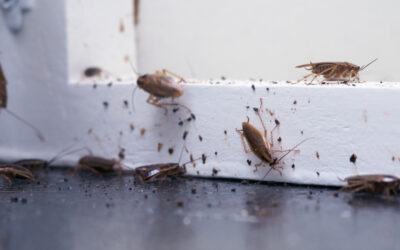
A sudden increase in spiders around your home is almost never about the spiders themselves — it’s a signal that your property is supporting an insect population large enough to attract and sustain a growing number of predators.
Spiders are carnivores that go where the food is, and their food is other insects, so when you notice more webs in your garage, more spiders on your porch, or more activity in your basement, it means the insects they feed on are thriving nearby. A single spider can consume roughly 2,000 insects per year, and with over 45,000 known spider species worldwide — all of them predators — their presence around your home functions like a biological indicator of a broader pest ecosystem.
We help homeowners across Reno, Sparks, Truckee, Carson City, and Northern Nevada understand what’s driving spider activity around their property, and the answer is almost always the same: fix the insect problem, and the spider problem takes care of itself.
Summary
- Heavy spider activity around your home is a symptom of an underlying insect population, not a standalone problem — spiders are predators that position themselves near reliable food sources.
- Research published in The Science of Nature found that the global spider community kills an estimated 400 to 800 million tons of insect prey annually, with more than 90% of their diet consisting of insects and springtails.
- Outdoor lighting, moisture sources, clutter, dense vegetation, and unsealed entry points are the five most common conditions that attract insects to your home and, in turn, attract the spiders that feed on them.
- Northern Nevada’s seasonal cycle drives spider populations to peak in late summer and early fall, when insect populations are at their highest after months of warm-weather breeding.
Spiders Follow Their Food Supply
This is the single most important concept to understand about spider activity around your home. Spiders don’t seek out houses for warmth, food scraps, or shelter the way ants and rodents do. They position themselves wherever insect prey is most abundant. If your property has a healthy population of flies, mosquitoes, ants, moths, earwigs, or beetles, spiders will set up webs and hunting grounds nearby — it’s as simple as that.
What a Spike in Spiders Really Tells You
When you start seeing more spiders than usual, it’s worth thinking about what changed. Did insect activity increase first? In most cases, the answer is yes. A wetter-than-normal spring, a change in outdoor lighting, new landscaping, or a moisture issue around your foundation can all cause insect populations to spike, and spider populations follow within weeks.
This is also why treating just the spiders you see — knocking down webs and spraying individual spiders — rarely solves the problem. New spiders will replace the ones you removed as long as the insect food supply remains intact. The most effective approach addresses the root cause by reducing the insect populations that are sustaining spider activity in the first place.
Think of spiders as a thermometer for your property’s overall pest health. A few spiders in quiet corners are completely normal. Webs reappearing within days of being cleaned, multiple spiders in living spaces, or dense web clusters around your exterior walls suggest the insect population around your home has grown to a level that’s actively attracting predators.
Key Takeaways
- Spiders are predators that position themselves near insect food sources — more spiders means more insects are present around your property.
- Removing individual spiders or webs without addressing the underlying insect population provides only temporary relief.
- A noticeable increase in spider activity is a reliable indicator that broader pest conditions on your property have shifted.
Five Conditions That Attract Spiders to Your Property
If spiders follow insects, then reducing spider activity means figuring out what’s attracting insects to your home in the first place. The same conditions that make a property attractive to flies, moths, ants, and beetles are the ones that ultimately draw spiders in.
What’s Creating the Problem
1. Outdoor lighting. Porch lights, garage lights, and exterior fixtures attract flying insects at night — moths, mosquitoes, gnats, and beetles are all drawn to light. Spiders quickly learn to build webs near these light sources because they become reliable feeding stations. Switching to yellow or amber-toned bulbs can reduce the number of insects attracted to your lighting by up to 50%, according to research on insect phototaxis, because these wavelengths are less visible to most flying insects.
2. Moisture sources. Leaky faucets, standing water from irrigation, poor drainage, and condensation around air conditioning units all attract moisture-dependent insects. In Northern Nevada’s arid climate, any consistent water source around your home becomes a magnet for insects — and the spiders that hunt them.
3. Dense vegetation and landscaping. Shrubs, ivy, ground cover, and tree branches that touch or overhang your home create insect habitat directly against your structure. These plants harbor insects and provide natural bridges that both insects and spiders use to access your home’s exterior walls and roofline.
4. Clutter and undisturbed storage. Garages, sheds, woodpiles, and cluttered storage areas provide the dark, sheltered conditions spiders prefer for web-building and egg-laying. Cardboard boxes, stacked firewood, and rarely moved equipment create ideal microhabitats for both insects and the spiders that feed on them.
5. Unsealed entry points. Gaps around windows, doors, utility lines, vents, and foundation cracks allow insects to enter your home — and spiders follow them in. Once inside, wall voids, basements, attics, and closets offer quiet, undisturbed hunting grounds where spiders can establish themselves with minimal interference.
Key Takeaways
- Outdoor lighting is one of the most common and easily fixable causes of increased insect and spider activity around homes.
- Moisture sources, dense vegetation, and clutter create the insect-friendly conditions that sustain spider populations on your property.
- Sealing entry points prevents both insects and spiders from moving indoors.
Why Northern Nevada Homes See So Many Spiders
Northern Nevada’s high desert climate creates a distinct seasonal pattern for spider activity that plays out predictably every year across Reno, Sparks, Truckee, Carson City, and the surrounding communities.
The Seasonal Cycle
Spring (March through May) brings rising temperatures that trigger insect breeding cycles. As ant colonies, flies, and beetles become active, spider populations begin to grow in response to the increasing food supply.
Summer (June through August) is when insect populations reach their peak. Northern Nevada’s hot, dry conditions drive insects toward any available moisture, concentrating them around homes, irrigated landscaping, and outdoor water sources. Spiders feed heavily during this period and begin reproducing.
Late summer and fall (September through November) is when spider activity becomes most visible. This is when many spider species reach full maturity, their populations have been building all summer, and mating behavior makes them more active and conspicuous. Male spiders wander more widely in search of mates, which is why you’re more likely to see large spiders crossing floors or walls during this period. Female spiders are also producing egg sacs, each of which can contain dozens to hundreds of eggs depending on the species.
Winter (December through February) slows outdoor spider activity considerably, but spiders that are already established inside your home — in garages, basements, crawl spaces, and wall voids — remain active year-round.
In our arid climate, insect populations tend to concentrate around homes more intensely than they would in wetter regions, because your property offers water, shelter, and vegetation that the surrounding desert does not. This concentration effect is a key reason why Northern Nevada homeowners often feel like their property has more spiders than the surrounding landscape — and they’re usually right.
Key Takeaways
- Spider activity in Northern Nevada peaks in late summer and fall after months of population growth driven by summer insect abundance.
- Male spiders become more visible in fall as they wander in search of mates, which is why indoor sightings increase during this period.
- The arid landscape concentrates insects around irrigated properties, making Northern Nevada homes particularly attractive to spiders compared to the surrounding desert.
When Spiders Become a Safety Concern
Most spiders in Northern Nevada are harmless and actually beneficial — they consume thousands of pest insects each year without any effort on your part. However, certain species warrant extra caution, and a large spider population increases the odds of encountering them.
Black Widows in Northern Nevada
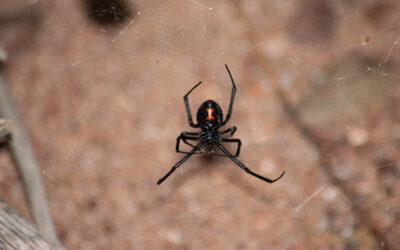
The western black widow (Latrodectus hesperus) is the most medically significant spider in our region and is commonly found in Reno-area garages, sheds, woodpiles, crawl spaces, and block walls. While black widow bites are painful and can cause muscle cramps, nausea, and elevated blood pressure, they are rarely life-threatening for healthy adults. The 2024 National Poison Data System reported 1,616 black widow bite cases nationwide, with only 3.4% requiring antivenom.
If you’re finding black widows around your property, it means two things: your property has a healthy insect population feeding them, and the undisturbed hiding spots they prefer are available. Addressing both of these conditions reduces black widow encounters significantly.
The general rule is this: a few common house spiders in quiet corners are normal and even beneficial, but regular sightings of venomous species, dense web buildup that returns quickly after cleaning, or spiders appearing in bedrooms and living spaces suggest the population has grown beyond what casual tolerance should accommodate.
Key Takeaways
- Most Northern Nevada spiders are harmless and ecologically beneficial, but black widows are present and require caution in garages, sheds, and storage areas.
- A large general spider population increases the likelihood of encountering venomous species.
- Regular sightings in living spaces or rapid web regrowth after cleaning are signs that professional intervention is warranted.
How to Reduce Spider Activity for Good
The most effective spider management strategy targets the conditions that attract insects to your property, because once the food supply decreases, spider populations naturally decline.
Practical Steps That Make a Difference
- Switch exterior lighting to yellow or amber bulbs — this single change can dramatically reduce the number of flying insects drawn to your home at night.
- Trim vegetation away from your home — keep shrubs, tree branches, and ground cover at least 12 to 18 inches from exterior walls to eliminate insect bridges and spider habitat.
- Fix moisture issues — repair leaky faucets, improve drainage, and address irrigation that pools near the foundation. In Northern Nevada’s dry climate, eliminating unnecessary moisture is one of the highest-impact changes you can make.
- Declutter storage areas — organize garages, sheds, and basements using sealed plastic bins on shelving instead of cardboard boxes on the floor.
- Seal entry points — caulk cracks around windows, doors, and utility penetrations. Install door sweeps and repair damaged screens.
- Inspect firewood before bringing it indoors — woodpiles are prime spider habitat in Northern Nevada, and carrying logs inside without checking is one of the most common ways spiders enter homes.
If you’ve addressed these conditions and spider activity remains high, the insect population sustaining them may require professional treatment. A perimeter application targeting the insect ecosystem around your home’s exterior is the most effective way to reduce the food supply that keeps spiders coming back.
Key Takeaways
- Targeting the insect food supply through lighting changes, moisture reduction, vegetation management, and decluttering is the most effective long-term spider reduction strategy.
- Sealing entry points and inspecting firewood prevent spiders from moving indoors.
- Professional perimeter treatment may be needed when DIY prevention steps aren’t enough to reduce the underlying insect population.
Let Us Help You Get to the Root of the Problem
We understand that seeing spiders everywhere around your home is unsettling, even when most of them are harmless. The good news is that spider problems are almost always solvable once you address the insect population driving them — and that’s exactly what we specialize in.
At Right Away Pest Solutions, we take an Integrated Pest Management approach that targets the root cause, not just the visible symptom. Our team has over 20 years of experience serving homeowners across Reno, Sparks, Truckee, Carson City, and the surrounding Northern Nevada communities. We offer free inspections with no obligation, no contracts, and a satisfaction guarantee on every service.
Call us at (775) 722-7708 to schedule your free inspection and find out what’s really attracting spiders to your property. Learn more about our full range of pest control services across Northern Nevada.