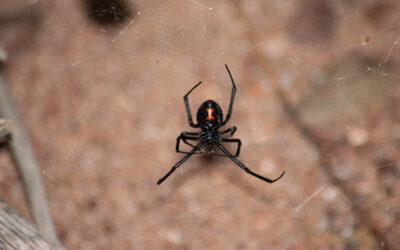
If you find a black widow spider in your home, the immediate priority is to keep a safe distance, keep children and pets away from the area, and avoid attempting to handle the spider with your bare hands.
Black widows are the most medically significant venomous spider in the United States, responsible for more clinically relevant bites than any other spider species, but they are not aggressive by nature and will only bite when they feel trapped or threatened. Approximately 2,500 black widow bite exposures are reported to U.S. poison control centers each year, yet only about 10% require hospital admission, and only one confirmed death from a black widow bite has been reported to poison centers since 1983.
We want to help homeowners across Reno, Sparks, Truckee, Carson City, and Northern Nevada understand how to react safely if they encounter one, how to identify a black widow with confidence, and what steps to take to reduce the chances of finding another one in your home.
Summary
- If you find a black widow, do not touch it — keep people and pets away, and either carefully capture it under a glass jar or contact a pest control professional to remove it.
- Black widow bites are painful and can cause serious symptoms including muscle cramps, nausea, and elevated blood pressure, but they are rarely life-threatening for healthy adults, with a fatality rate below 1%.
- The western black widow (Latrodectus hesperus) is the species found throughout Northern Nevada, and it thrives in garages, sheds, woodpiles, crawl spaces, and undisturbed storage areas.
- Reducing clutter, sealing entry points, and addressing the underlying insect populations that attract black widows are the most effective long-term strategies for keeping them out of your home.
How to Safely React When You Find One
The first few seconds after spotting a black widow in your home are important. Your instinct might be to grab a shoe or a can of spray, but the safest approach is to stay calm and avoid startling the spider into a defensive position.
Immediate Steps
Step 1: Back away and create distance. Black widows are not aggressive and will not chase you. They bite only when they feel cornered or when pressure is applied directly to their body — like reaching into a box they’re hiding in or putting on a glove they’ve crawled inside.
Step 2: Keep children and pets out of the area. If the spider is in a garage, storage room, or closet, close the door and prevent anyone from entering until the spider has been dealt with.
Step 3: Decide whether to remove it yourself or call a professional. If you’re comfortable doing so, you can carefully place a glass jar or sturdy container over the spider, slide a piece of cardboard underneath, and relocate it far from your home. Wear thick gloves and long sleeves if you attempt to capture a black widow — their fangs can penetrate thin fabric but cannot bite through leather or heavy work gloves.
Step 4: If bitten, seek medical attention. Clean the bite with soap and water, apply a cold compress to reduce swelling, and contact your doctor or call the Poison Help hotline at 1-800-222-1222. Seek emergency care immediately if the person bitten is a child under 16, an adult over 60, pregnant, or has a pre-existing heart condition. According to a 2024 National Poison Data System report, antivenom was administered in only 3.4% of black widow bite cases, but it can relieve severe symptoms within about 30 minutes when needed.
Key Takeaways
- Stay calm, create distance, and keep children and pets away — black widows bite only when they feel trapped or threatened.
- If you remove the spider yourself, use a sturdy container and wear thick gloves for protection.
- Seek medical attention for any black widow bite, and call 911 immediately if the person bitten is a child, elderly, or has heart problems.
How to Identify a Black Widow Spider
Accurate identification matters because Northern Nevada is home to many spider species, and most of them are completely harmless. Knowing exactly what a black widow looks like helps you avoid unnecessary alarm while taking genuine threats seriously.
Key Identifying Features
The female black widow is the one you need to watch for. She has a shiny, jet-black, globe-shaped body about the size of a large pea to a small marble, with a leg span of roughly 1 to 1.5 inches. The defining feature is the bright red or orange-red hourglass-shaped marking on the underside of her abdomen. This hourglass is unmistakable and is the single most reliable way to confirm you’re looking at a black widow.
Male black widows are smaller, lighter in color (often brown or gray), and have less potent venom. They rarely bite humans and are not considered a medical concern.
A few common lookalikes in Northern Nevada include false widow spiders and juvenile black widows that haven’t yet developed the full hourglass marking. If you find a shiny black spider and you’re not sure whether it’s a black widow, treat it as one until a professional can confirm. The cautious approach costs you nothing, while a careless one could result in a painful bite.
Black widows build irregular, messy webs close to the ground in dark, sheltered areas. Their webs don’t have the organized spiral pattern of garden spiders — they look tangled and haphazard. The web itself can be a useful identification clue when the spider isn’t immediately visible.
Key Takeaways
- Female black widows are shiny black with a red hourglass marking on the underside of the abdomen — this is the most reliable identifier.
- Males are smaller, lighter-colored, and not a medical concern.
- If you’re unsure whether a spider is a black widow, treat it as one and keep your distance until it can be properly identified.
Where Black Widows Hide in Northern Nevada Homes
Black widows are ambush predators that prefer dark, undisturbed, sheltered spaces where insects are likely to wander into their webs. Understanding where they hide helps you know where to be cautious and where to focus your prevention efforts.
Common Hiding Spots
In Northern Nevada, black widows are most commonly found in:
- Garages — especially along the floor-wall junction, behind storage boxes, under workbenches, and near exterior doors that attract insects with light at night
- Sheds and outdoor storage — garden sheds, pool equipment enclosures, and storage units provide the dark, undisturbed conditions black widows prefer
- Woodpiles — stacked firewood is one of the most common black widow habitats in our region, and bringing in firewood without checking it first is one of the most frequent ways spiders get carried indoors
- Crawl spaces and basements — low-traffic areas with ground-level access are ideal black widow habitat
- Block walls and retaining walls — the crevices in decorative block walls and landscape retaining walls provide perfect shelter
- Outdoor furniture and play equipment — check under patio chairs, picnic tables, and the underside of playground equipment that hasn’t been used in a while
Northern Nevada’s dry, warm climate creates ideal conditions for black widows. The Reno-Sparks area’s 253 sunny days per year and mild evening temperatures during summer and fall provide a long active season. A 2012-2022 retrospective study of over 15,000 black widow exposures reported to U.S. poison centers found that bites occur with higher frequency in warm-weather states and during summer months, which aligns perfectly with our region’s peak spider activity from May through October.
Key Takeaways
- Black widows favor dark, undisturbed spaces like garages, sheds, woodpiles, crawl spaces, and block walls — always check before reaching into these areas.
- Firewood is one of the most common vehicles for bringing black widows indoors in Northern Nevada.
- Our region’s warm, dry climate provides a long active season from May through October, making seasonal awareness important.
How to Reduce Black Widow Encounters in Your Home
Finding one black widow doesn’t necessarily mean your home is overrun, but it does mean conditions around your property are favorable for them. Black widows go where the food is, and their food is other insects, so the most effective long-term strategy is to reduce the insect populations that sustain them while eliminating the sheltered hiding spots they prefer.
Prevention Strategies That Work
- Reduce outdoor lighting near entry points — porch lights, garage lights, and exterior fixtures attract flying insects at night, which in turn attract the spiders that feed on them. Switch to yellow or amber bulbs that attract fewer insects, or move lights away from doorways.
- Declutter storage areas — the more boxes, piles, and undisturbed junk you have in your garage, shed, or basement, the more habitat you’re providing. Organize storage off the floor on shelving and use sealed plastic bins instead of cardboard boxes.
- Inspect firewood before bringing it inside — check every piece and knock logs together outside to dislodge any spiders or egg sacs before carrying them into your home.
- Seal entry points — caulk gaps around doors, windows, pipes, and where utility lines enter the home. Install door sweeps on garage doors and exterior doors that have gaps at the bottom.
- Wear gloves when working in high-risk areas — thick leather or heavy-duty work gloves should be standard practice whenever you’re reaching into woodpiles, storage boxes, crawl spaces, or any dark area you can’t see into clearly.
- Address the underlying insect problem — if your property has a significant black widow presence, it almost always means there’s an insect population feeding them. A professional perimeter treatment that reduces the insect population around your home’s exterior will naturally reduce spider activity as the food supply disappears.
Key Takeaways
- Reducing insect populations around your home is the most effective way to reduce black widow activity, because spiders follow their food supply.
- Decluttering storage areas, switching outdoor lighting, and inspecting firewood are simple habits that significantly lower your risk of encounters.
- Always wear thick gloves when reaching into dark, undisturbed spaces — this single habit prevents the majority of black widow bites.
When to Call a Professional
A single black widow in your garage isn’t unusual in Northern Nevada, and it doesn’t necessarily mean you need professional service. However, if you’re finding black widows regularly, discovering egg sacs (which look like small, smooth, cream-colored spheres), or encountering them inside living spaces rather than just in outbuildings, the population around your property has likely grown to a level that warrants professional attention.
A professional service for black widows typically includes a thorough inspection to identify active web sites and hiding spots, targeted treatment of those specific areas, a perimeter treatment to reduce the insect populations feeding the spiders, and recommendations for habitat modification. This is where the Integrated Pest Management approach is especially effective — rather than just spraying, an IPM approach addresses the root conditions that made your property attractive to black widows in the first place.
At Right Away Pest Solutions, we’ve been managing black widow populations for homeowners across Reno, Sparks, Truckee, Carson City, and Northern Nevada for over 20 years. We know where these spiders hide in our climate, we understand the seasonal patterns that drive their activity, and we tailor every service to your property’s specific conditions. We offer free inspections with no obligation, no contracts, and a satisfaction guarantee.
Call us at (775) 722-7708 if you’re concerned about black widows around your home — we’ll come take a look and tell you exactly what we find. Learn more about our full range of pest control services across Northern Nevada.